Analyzing Data, from Crime Trends to Resource Allocation
The Economist and Data Scientist Role in Public Security
May, 2025
Jesus LM
Economist & Data Scientist
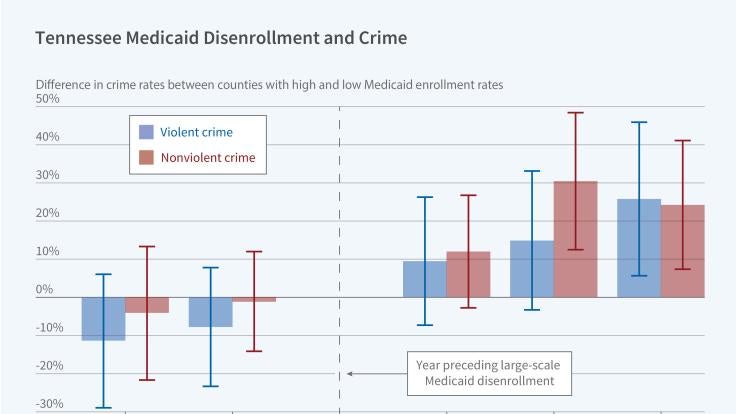
The combination of economic and data science expertise can be highly valuable in enhancing public security. Here’s a breakdown of how these professionals can contribute.
Economist Contributions
Analyzing the Economic Roots of Crime
Economists can study the correlation between economic factors (poverty, unemployment, inequality) and crime rates. They can analyze how economic policies impact crime rates, helping policymakers understand the potential consequences of their decisions.
Cost-benefit analysis of crime prevention programs
Economists can evaluate the economic efficiency of various public security initiatives.
Resource Allocation
They can help optimize the allocation of public security resources, ensuring that funds are directed towards the most effective programs and areas. Analyzing the economic impact of crime on communities and businesses.
Understanding illicit economies
Analyzing the economic structures of illegal markets, such as those involving drugs, human trafficking, or illegal arms sales. Evaluating the effectiveness of policies aimed at disrupting these markets.
Data Scientist Contributions
Predictive Policing
Data scientists can develop models to predict crime hotspots and identify individuals at high risk of involvement in criminal activity.
Analyzing crime patterns and trends to inform resource deployment.Data-Driven Crime Analysis
They can analyze large datasets from various sources (police reports, social media, etc.) to identify patterns and insights that would be difficult to detect manually. Using geospatial analysis to map crime hotspots and understand spatial patterns.
Improving Law Enforcement Efficiency
Developing tools to automate tasks, improve data management, and enhance communication between law enforcement agencies. Analyzing the effectiveness of law enforcement strategies and identifying areas for improvement.
Fraud Detection
Data Scientists can build models that detect fraudulent activities, which are often connected to organized crime.
Analyzing the effects of social programs
They can analyze the effects of social programs on crime rates, and help determine which programs are the most effective.
Synergistic Collaboration
When economists and data scientists collaborate, they can provide a more comprehensive understanding of public security challenges. Economists can provide the context and theoretical framework, while data scientists can provide the tools and techniques for analyzing the data. This interdisciplinary approach can lead to more effective and evidence-based public security policies. In essence, by combining economic theory with data-driven analysis, these professionals can play a vital role in creating safer and more secure communities.
Key functions that an economist and data scientist might perform in public security.
Crime Pattern Analysis and Prediction
Economist Focus
Analyze how economic conditions (e.g., unemployment, poverty, income inequality) correlate with crime rates in specific areas. Develop economic models to explain these relationships.
Data Scientist Focus
Use machine learning algorithms to identify patterns in crime data (time, location, type of crime, offender demographics). Build predictive models to forecast future crime hotspots and times.
import pandas as pd
from sklearn.model_selection import train_test_split
from sklearn.ensemble import RandomForestRegressor

def predict_crime_hotspots(crime_data, features, target, test_size=0.2):
    """
    Predicts crime hotspots using a Random Forest Regressor model.

    Args:
        crime_data (pd.DataFrame): DataFrame containing crime data.
        features (list): List of feature columns to use for prediction.
        target (str): The target variable (e.g., 'crime_rate').
        test_size (float): Proportion of the data to use for testing.

    Returns:
        tuple: (model, X_test, y_test) - Trained model, test features,
        and test target.
    """
    X = crime_data[features]
    y = crime_data[target]

    X_train, X_test, y_train, y_test = train_test_split(X, y,
    test_size=test_size, random_state=42)

    model = RandomForestRegressor(n_estimators=100, random_state=42)
    model.fit(X_train, y_train)

    return model, X_test, y_test
Example usage:
'''
Assuming 'crime_data' is a DataFrame with columns like:
    'location_x', 'location_y', 'time', 'crime_type',
    'unemployment_rate', 'poverty_rate', 'crime_rate'
'''

features = ['location_x', 'location_y', 'time', 'crime_type',
            'unemployment_rate', 'poverty_rate']
target = 'crime_rate'
model, X_test, y_test = predict_crime_hotspots(crime_data, features,
                                                target)
predictions = model.predict(X_test)
print(predictions)
Conclusions
In summary, the combined expertise of economists and data scientists offers a powerful toolkit for enhancing public security. Economists illuminate the underlying causes of crime, while data scientists provide the means to predict, prevent, and effectively respond to threats. Embracing this interdisciplinary approach is crucial for developing smarter, more targeted, and ultimately more successful strategies for creating safer communities.
References
- NBER (2025). Economics of Crime. Retrieved from website.
Contact
Jesus LM
Economist & Data Scientist